Planning a funeral checklist
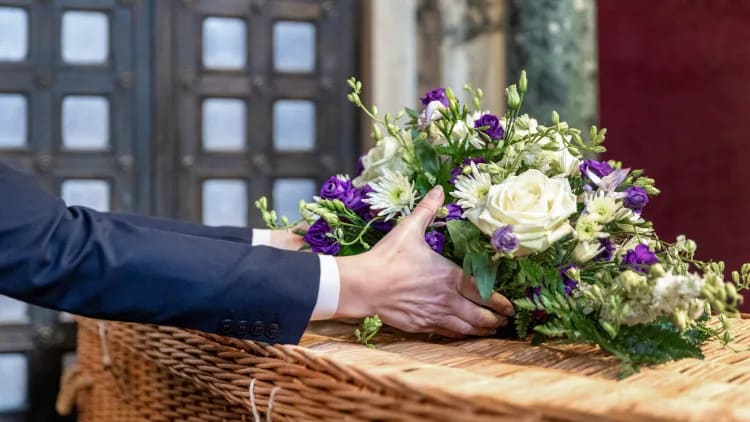
A funeral service is a chance to honour the person that has died and reflect on their life, values and beliefs. It's an occasion for mourning, personal reflection and celebrating the life of a loved one.
How to plan a funeral service
If you're responsible for planning a funeral service, you should allow time (around 30 minutes) in the crematorium’s chapel. This will allow ample time for attendees to calmly enter and exit.
Upon your arrival at the crematorium, your loved one’s coffin will be resting on the catafalque in the chapel. You'll be welcomed inside by a chapel attendant.
This checklist will guide you through the process of planning a funeral service:
Choose a type of service
Decide who will lead the service
Include funeral music
Include funeral readings
Include poems
Ask a friend or family member to prepare a eulogy
Create an order of service
Consider flowers or charitable donations
Consider funeral attire
Organise a wake
1. Choose a type of service
The first step of planning a funeral is to think about the type of service you would like. Although in the past funerals have been very traditional, this is no longer always the case.
Planning a funeral is now more of a personal process, with funeral services shaped around the deceased’s life, religious or spiritual beliefs or family traditions.
Honouring life with personal touches and details can create a meaningful and lasting remembrance, whether that's by adding small details or planning a more elaborate affair; how the service is planned is completely up to you.
At Simplicity we offer low-cost direct cremation, where no mourners are present. This cheaper alternative can help you save significant funds, which for example could be used on a memorial service after the cremation or a celebration of life.
2. Who will lead the funeral service?
An important consideration when organising a funeral is who'll conduct the service. Although most funerals are lead by a celebrant or minister, anyone can perform a funeral service.
If you decide you would like a family member or friend to lead the service, be sure whoever you ask is confident doing so.
It's totally understandable that even the most confident person may get upset. In some cases, they may feel that they can’t continue, so it’s a good idea to have someone else in place who can continue until the family member regains their composure.
If you'd like a religious figure to lead the ceremony or something more formal, we can also provide guidance on finding a minister or officiant.
When org anising a funeral of any kind, there will be a limit onthe length of time allowed in the chapel. We’d recommend planning for around 30 minutes, so there’s ample time to enter and exit the crematorium without feeling rushed.
3. Common elements of a funeral service
Every funeral service will be different, as it will be unique to the person who has died. A typical funeral service may include funeral music, eulogies and funeral poems read by family and friends. You may have other ideas, especially if your loved one had any special hobbies or interests.
4. Funeral music
Funeral songs and music are a great way of personalising a funeral. Music can be a powerful aid when processing grief.
All of our crematoria feature a music system so you'll have the ability to arrange a playlist of songs to play inside the chapel. It can be a nice touch to have your loved one’s favourite song playing as you enter or exit the chapel.
If you need inspiration, read our guide on popular funeral songs in the UK.
At a Christian funeral service, traditionally there are two hymns sung; one hymn to open the service and a second as a closing hymn.
Many people also find comfort in including funeral hymns in their loved one’s funeral, even if they were not of Christian faith. Several hymns have remained popular song choices for funerals over the years.
5. Ask a family member or friend to prepare a eulogy
It's common to feature a eulogy as part of the order of service, as a tribute to your loved one. You should consider asking someone who knew your loved one well, so they’ll be able to say something appropriate and fitting.
It can be quite an honour to be asked to speak at a funeral, although some people may prefer not to, as it can take a lot of confidence to stand up and speak in front of a large congregation.
You may find our guide to writing a eulogy helpful.
6. Funeral readings
Although whoever is leading the funeral service will do most of the speaking, it’s common for a loved one to read a few words. This is often in addition to the eulogy.
Bible readings are an important part of a funeral service for those of Christian faith. If religious readings weren’t in the interests of your loved one, a reading from their favourite book or even lyrics from a song might be more appropriate.
If you've got multiple friends and family members who would like to say something, then several shorter readings rather than one longer funeral reading may be a good option.
7. Funeral poems
Like funeral songs and readings, a funeral poem can provide comfort as well as serving as a touching reminder of a loved one. We’ve created a guide to choosing a funeral poem, which includes a collection of short, happy and religious funeral poems.
You don't have to choose a traditional poem; writing your own poem means you can make it truly personal. You can include memories shared with your loved one, their hobbies and interests.
8. Share memories of your loved one
There are lots of ways of sharing memories at a funeral. A photo memory board can be a nice touch for everyone to share photos of happy times with the departed.
By asking family and friends for pictures, you should hopefully collect a range of photos covering the course of their life, as different people might have known them best at different times. This is a nice way to highlight the person’s life and accomplishments.
Taking this one step further, you could dedicate part of the service so mourners can share memories and stories with the congregation.
In an independent survey, 41% of people said they’d like a family member or friend to share a loving story about them at their funeral.
Alternatively, you could leave paper and pens on the seats so guests can write their memories and place them into a memory box at the end of the service.
9. Plan the funeral order of service
A funeral order of service provides an outline of what will happen throughout the service. It's often a printed 4-page booklet that is handed out to mourners as they enter the chapel.
An order of service sheet often includes:
Hymns
Songs
Readings
Poems
Photographs
10. Funeral flowers or charitable donations
Many people choose to arrange funeral flowers and floral tributes to create a personal tribute, often in the form of a coffin spray or letter tributes (such as ‘MUM or ‘NAN’).
Most florists are experienced with funerals and will be happy to assist in talking through the available options. You can also purchase funeral flowers via the internet.
It used to be common for mourners attending a funeral to send flowers as a tribute but the practice is becoming less common, with many families now asking for charitable donations instead.
If you would like to request donations in lieu of flowers, you can include this request in any newspaper obituary notice, along with details of the chosen charity. Some families choose to leave the choice of charity to individual mourners.
11. Funeral attire
Opting for alternative funeral attire is a really easy way to personalise a service. It’s becoming a popular request to ask mourners to dress in bright colours or even your loved one’s favourite colour, instead of traditional mourning colours.
When making funeral arrangements you should give attendees as much notice as possible, if you wish for them to dress in a particular way.
12. Organise a wake
When arranging a funeral for your loved one, you may want to consider holding a reception after the service. A funeral reception, or wake is a more informal chance to pay your respects to someone who has died.
Funeral wakes are less formal than the service, offering a place for the bereaved to gather, share stories of a loved one, and celebrate their life.
It isn’t compulsory to arrange a wake, although it is a widely held custom. People may choose to attend the wake if they can't make the funeral; while some guests who were at the funeral may be unable to attend the wake.
See our dedicated guide to learn more about how to organise a wake.
Arrange a low-cost funeral with Simplicity Cremations
With a Simplicity Cremation, there's no need to follow tradition. Our fuss-free funeral enables you to organise a personalised service at a later date, befitting of your loved one's life and character.
Honouring life with personal touches and details can create a meaningful and lasting remembrance, whether that's by adding small details or planning a more elaborate affair; how the service is planned is completely up to you.
To arrange a low-cost funeral for your loved one, contact Simplicity today. Our helpful team are available 24 hours a day, 7 days a week.
A funeral plan for peace of mind
If you’re planning ahead, our direct cremation funeral plan is the way to go. From just £1,800, with no hidden costs, it’s simpler and more affordable than a traditional funeral.
Buy your funeral plan today »